
Shifting Problems Diagnosed at the Component Level
Transmissions in Merriam for vehicles experiencing delayed engagement, slipping gears, or hard shifts
Automatic transmissions use hydraulic pressure controlled by solenoids and valve bodies to manage gear changes, and when pressure drops, solenoid valves stick, or clutch packs wear, you notice delayed acceleration, flaring RPMs between shifts, or harsh engagement when moving from park to drive. Mission Auto KC provides transmission diagnostics and repair in Merriam, addressing both electronic control failures and mechanical wear that affect shift quality. Modern transmissions contain dozens of sensors monitoring fluid temperature, pressure, and gear position, and faults in any component alter how the transmission control module commands shift points.
Transmission service begins with electronic diagnostics to retrieve fault codes, followed by fluid inspection to check for contamination or burnt odor indicating clutch material breakdown. Depending on symptoms, further diagnosis may involve pressure testing individual hydraulic circuits, solenoid resistance checks, or removal of the transmission pan to inspect valve body components and filter condition.
Request a transmission evaluation to determine whether your shifting issue requires fluid service, solenoid replacement, or internal repair.
Why Transmission Failures Progress Without Intervention
Transmission fluid degrades over time from heat cycles, losing its friction-modifying properties and allowing clutch packs to slip during engagement. Slipping generates additional heat, which accelerates fluid breakdown and creates a cycle where each shift worsens wear on internal components. Solenoid valves that control fluid flow can stick partially open or closed due to varnish buildup, causing erratic shift timing or failure to engage certain gears.
When repairs are completed, your transmission engages gears without delay, maintains steady engine RPM through each shift, and eliminates shuddering or jerking during acceleration. You'll notice smoother transitions between gears and restored power delivery without the flaring sensation that occurs when clutches slip under load.
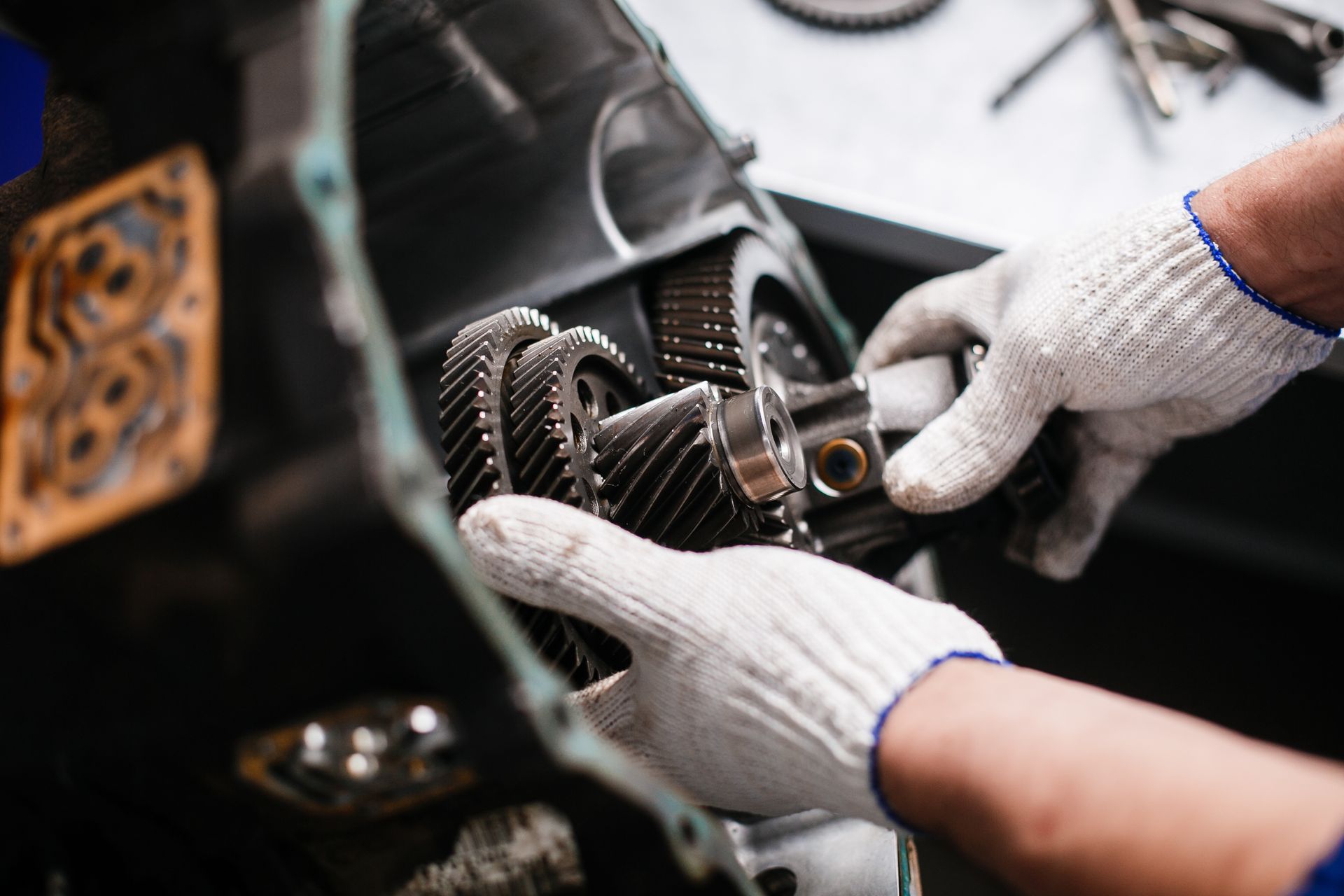
Transmission repairs vary widely based on whether electronic components, hydraulic controls, or friction elements require replacement. External repairs address solenoids, sensors, and fluid replacement, while internal work requires disassembly to replace clutch packs, bands, or seals. Early diagnosis often reveals problems solvable without full transmission removal, while continued operation after symptoms appear typically expands damage into multiple internal components.
Common Transmission Questions Answered
Transmission problems show up through noticeable changes in how your vehicle shifts and accelerates, and different symptoms point to specific component failures.
What does transmission slipping feel like while driving?
Slipping occurs when engine RPM increases without corresponding acceleration, typically during shifts or uphill driving, caused by clutch packs that no longer hold pressure or fluid levels too low to maintain hydraulic force.
How often should transmission fluid be replaced?
Most manufacturers specify fluid changes between thirty thousand and sixty thousand miles depending on driving conditions, with towing, stop-and-go traffic, and high heat climates accelerating fluid degradation and requiring shorter intervals.
Why do some transmissions fail suddenly while others show gradual symptoms?
Electronic failures like solenoid shorts or sensor malfunctions cause sudden loss of specific gears, while mechanical wear from clutch degradation produces gradually worsening slip and delayed engagement over weeks or months.
What causes hard shifts or clunking when changing gears?
Hard shifts result from worn transmission mounts allowing excessive movement, incorrect fluid pressure from failing solenoids, or valve body wear that prevents smooth pressure transitions between gear changes.
Can transmission problems appear worse in Merriam during winter months?
Cold transmission fluid increases viscosity and slows hydraulic response, making worn components more noticeable during warm-up periods until operating temperature restores normal flow characteristics.
Mission Auto KC evaluates transmission symptoms through systematic testing that identifies whether electronic controls, fluid condition, or internal components require attention. Schedule an inspection when you notice any change in shift quality to prevent limited failures from spreading throughout the transmission assembly.